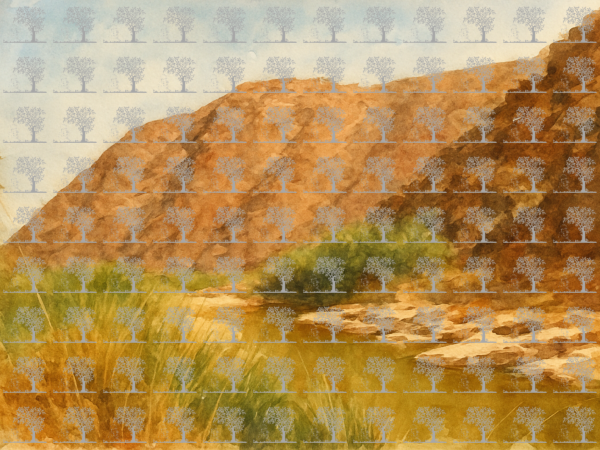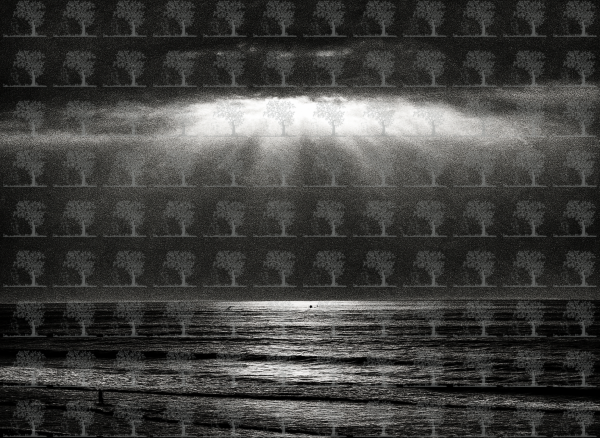
Nature, Elevated.
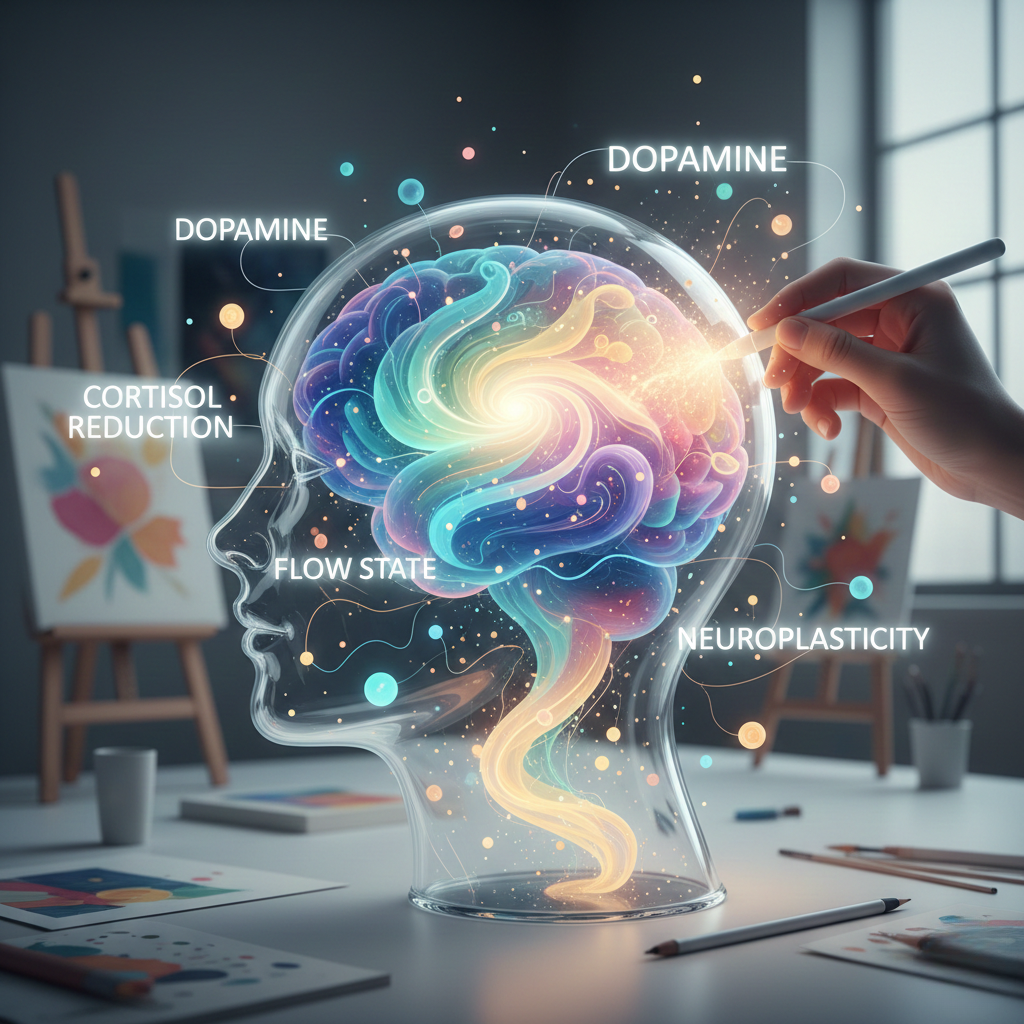
We often think of art as a luxury—something found in quiet museums or expensive galleries. But what if I told you that art is actually a biological necessity for well-being? Whether you are holding a paintbrush, snapping a photo, or simply observing a masterpiece, your brain is undergoing a profound chemical transformation.
Neuroscience is finally catching up to what artists have known for centuries: artistic expression is a shortcut to emotional balance. Here is how it works.
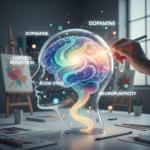
Neurobiologist Semir Zeki discovered that when we look at art we consider beautiful, our brain releases an immediate surge of dopamine (the reward hormone).
Interestingly, his research showed that blood flow to the brain increases by up to 10%—an effect similar to looking at a loved one. This isn’t just “appreciation”; it’s a physical reaction that triggers the brain’s pleasure centers, providing an instant mood boost.
You don’t need to be Picasso to benefit from Art Therapy. A famous study found that just 45 minutes of creative activity significantly lowers levels of cortisol (the stress hormone) in the body.
The best part? The results were the same regardless of the person’s skill level. Whether you create a masterpiece or a simple doodle, your body physically relaxes the moment you start practicing mindful art.
Have you ever started a project and suddenly realized three hours had passed? Psychologists call this Flow State.
When you are in “the zone,” the part of your brain responsible for self-criticism (the prefrontal cortex) temporarily quiets down. This creates a meditative state where:
Engaging with art strengthens the connections between different parts of the brain. This neuroplasticity helps improve problem-solving skills and resilience. By choosing to observe or create art, you are essentially training your brain to see the world from new, more positive perspectives.
The Takeaway: Art isn’t about being “good” at drawing. It’s a powerful tool for self-care.
Your challenge for today: Spend just 10 minutes looking at a piece of art that moves you, or grab a pen and draw something. Your brain will thank you for the happiness boost!